A bite pattern alone isn't proof — our technicians confirm live insects or casings visually before recommending heat or chemical treatment, so you're not paying to treat a problem that isn't there. Because bed bugs don't fly or jump, every infestation has a traceable entry point, and finding it is part of preventing a repeat case.
A technician confirms live activity or casings before recommending heat treatment, chemical treatment, or a combined approach.
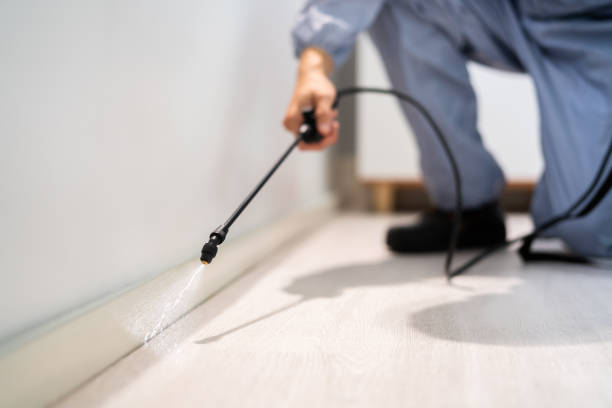
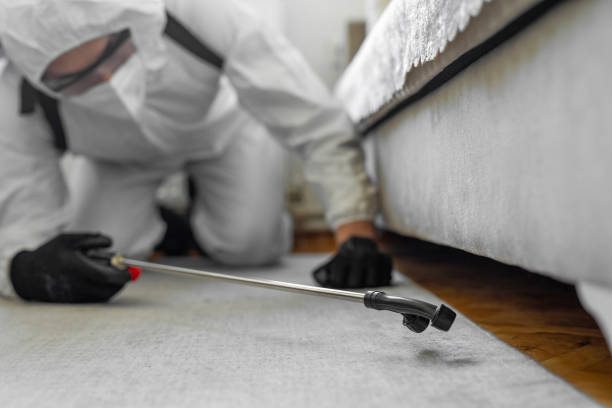

Every technician handling Gillespie bed bug cases carries state licensing and liability coverage for both heat and chemical treatment.
Bed bug calls get scheduled quickly since populations spread between rooms — and sometimes between units — within days.
Pricing is based on room count and infestation severity, quoted in full before treatment begins.
Interceptor traps placed under bed legs monitor activity between visits without any chemical exposure.
Heat treatment raises the room to a temperature that kills bed bugs and eggs in a single extended session, reaching areas a spray can't.
We apply residual product specifically to harborage points identified during inspection, not a blanket room fogging.
Encasements trap any remaining bugs inside and prevent new ones from establishing in the mattress seams.
Monitoring devices let us confirm population decline objectively instead of relying on guesswork at the follow-up.
We work directly with property managers to schedule multi-unit treatment with minimal tenant disruption.
A dedicated clearance visit confirms zero activity before we consider the case closed, not just an assumption after treatment.

Tell dispatch which rooms are affected so the technician arrives prepared with the right equipment for your case size.
A technician arrives with inspection tools, interceptors, and either heat or chemical treatment equipment ready to go.
Inspection determines whether heat treatment, targeted chemical treatment, or a combination fits your specific case.
Initial treatment happens the same visit, with a two-week follow-up and final clearance check built into your plan.
Two visits later and the interceptor traps showed zero activity. The follow-up inspection gave us real peace of mind, not just a guess.
As a property manager, having a company that handles multi-unit protocol correctly saved us from a much bigger spread.
The encasements they recommended after treatment have kept things clear for six months now.
Traveled a lot for work and picked up bed bugs from a hotel stay without realizing it until they'd spread to the bedroom. The technician traced it back to the suitcase itself.

No matter which Gillespie neighborhood or building you're in, a technician equipped for bed bug-specific work can reach you quickly and discreetly. We service single-family homes, apartments, and multi-unit buildings across Gillespie with the same discreet arrival and unmarked vehicles.

A technician looks for live insects, casings, or fecal spotting on seams before confirming — bites alone aren't reliable proof.
It depends on infestation size and layout — heat reaches wall voids and furniture in one session, while chemical treatment suits smaller, localized cases.
Most cases follow a three-visit protocol: initial treatment, a two-week recheck, and a final clearance inspection.
In most cases, treatment plus a certified encasement lets you keep the mattress instead of replacing it.
That's why we recommend inspecting adjoining units in multi-family buildings before treating just one apartment.
Minimal prep is needed for heat treatment, but chemical treatment benefits from some furniture clearance we'll walk you through.
Call +1-866-315-0243 for a discreet, same-day inspection.
Call +1-866-315-0243